Information and Activities
Migration
One of the best things about autumn for Jock is the comings and goings of his feathered friends. That’s called migration, and it’s pretty incredible-it’s the regular movement of some birds and wildlife from one part of the world to another, and back again.
More about migration can be found on RSBP web site in the Migration section.
He waves off his osprey, swallow, swift, sand and house martin friends, hoping their babies are strong enough, knowing that most are heading for Southern Africa, but the house martins refuse to tell him where they are going, they like being mysterious!
He misses the song of the willow warblers and spotted flycatchers and he sometimes gets muddled up with the blackcaps-his summer ones head south to the Mediterranean, but he gets new arrivals from Central Europe!
He’s always excited to welcome his pals who will spend winter here!
Pink Footed Geese
One of the best things about autumn for Jock is when he hears the ‘ink ink’ of the pink footed geese flying in skeins. That’s the ‘v’ flying formation, as they arrive from Greenland and Iceland, flying an incredible 3,400 miles!
They’re pretty amazing! An astonishing 30,000 spend time with us and Loch of Skene is one of their main roost sites. They like safe overnight roosts on water and it’s incredible to see them at first and last light heading to and from their feeding areas. They come here in October from Greenland and Iceland and spend winter munching on farmland and wetland before heading north again in April.
To find out more about pink Footed geese on the RBPB web site in their Pink Footed Goose section.
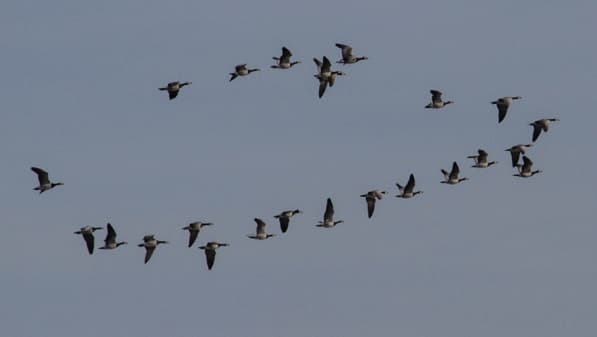 Photograph Credit Tim Marshall
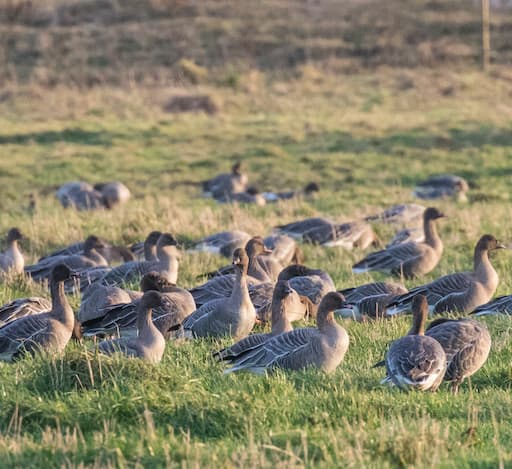 Photograph Credit Tim Marshall
Whooper Swans
The honk honk call of the whooper swans as they arrive from Iceland always make Jock giggle! He thinks they sound like Chitty Chitty Bang Bang as they fly majestically on their 2-2.5 meter wing span. They fly in from Iceland having flown some 940 miles! He loves to peep over from Millstone Hill to watch the flock of about 100 which winters close to the River Don between Kemnay and Monymusk, but you might see them elsewhere.
Enjoy this wonderful video of whooper swans, singing, dancing and flying.
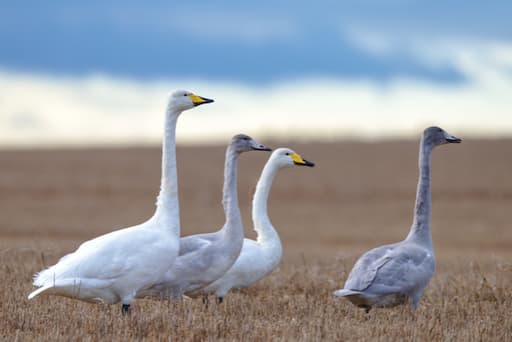 Whooper Swans Photograph Credit Ron Macdonald
Fieldfares and Redwings
Now it has to be said that sometimes Jock can’t tell his fieldfares from his redwings! They tend to be in flocks together. They’re both like thrushes but there are giveaways to tell them apart.
Read more on the Woodland Trust's web site Redwings and Fieldfares: identification tips and why we record them.
They come in from Scandinavia and Iceland , around 500 miles away, the fieldfares first in early September and the redwings from late September.
Jock loves to see flocks of these along with his song thrushes in the fields and on the edge of the woodland around Bennachie gorging themselves on the Rowan berries, but you might see them in woodland orchards, farmland and parks.
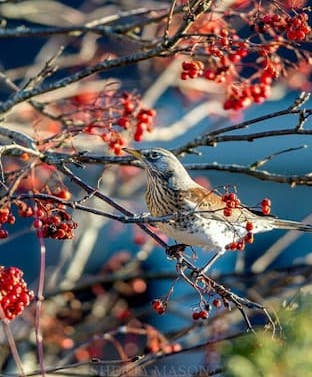 Fieldfare (Photograph Credit Sheeja Masson)
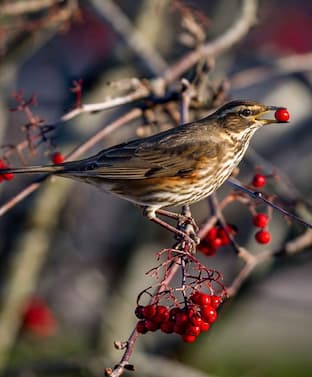 Redwing (Photograph Credit Sheeja Masson)
Waxwings
Its always a special day if Jock sees a beautiful waxwing. These starling sized birds arrive from Scandinavia, 500 miles away, in October, staying till March. In some years he sees very few, and others will have loads! If there are lots, he knows the weather in Scandinavia is bad and they have eaten all the berries up there. They love rowan and cotoneaster berries.
Jock Says: These little guys can eat 800-1000 berries a day, twice their body weight!
Keep your eyes peeled for hungry waxwings scoffing the autumn berries like these:
Learn more about Waxwings on the RSPB web site.
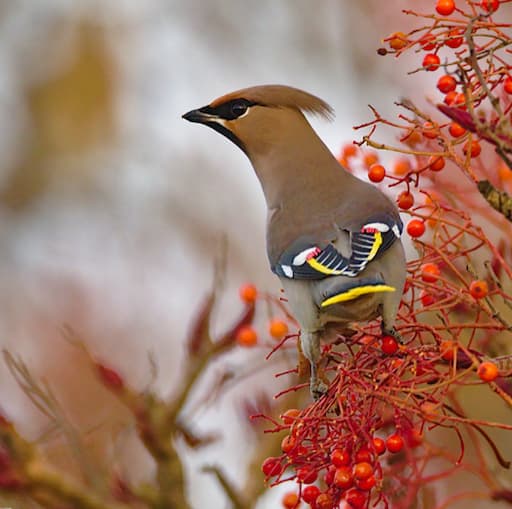 Waxwing Photograph Credit Ron Macdonald
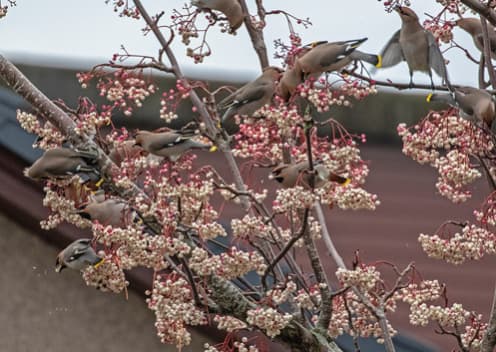 Waxwing Photograph Credit Walter Burns
Robins, Blackbirds and Jays
Jock’s year round robins and blackbirds are joined in autumn by winter visitors from Scandinavia, so a winter robin in your garden may have been born nearby, or may have migrated across the North Sea. Robins are unusual as they defend their winter territories and the males and females both sing.
During autumn it’s pretty unusual to hear our garden birds bursting into song-but you can rely on the nation’s favourite bird, the robin to be singing away. In fact it can be easier to hear the robin’s song in autumn since the other birds tend to be quiet.
Once they have finished moulting and have their new feathers, it’s thought they sing in autumn to establish their feeding territories, and if you watch, you might see this fiery little bird defending his or her territory and chasing the other birds away. That said, you can see them chasing other birds off all year round!
Male blackbirds look black all over, but Jock always notices their wings. If they are brown it is a young bird born in the summer; black wings are males over a year old.
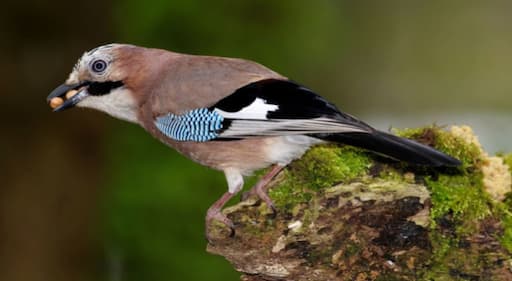
Jock gets lots of fun watching the jays in autumn. Normally quite shy, he sees more of them in autumn. They’re flat out busy stashing acorns in holes they make with their beaks - only to spend the rest of the winter trying to remember where they have hidden them! These screechy birds can stash an amazing 5,000 acorns in autumn, and like to do so by bushes and trees.
Learn more by exploring these links:
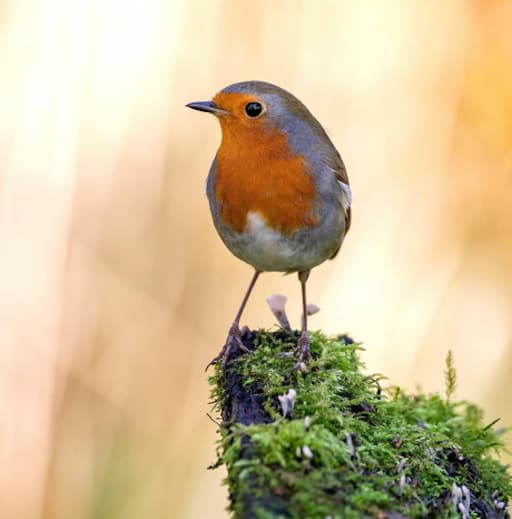 Robin - Photograph Credit Andy Wilson
Also See
Also see our Summer Programme, Spring Programme, Winter Programme and Autumn Programme
If you have enjoyed these activities please share them with your friends and family.