Moths are struggling right now!
Butterfly Conservation are experts on this - see Why Moths Matter
Sadly moths are in trouble in the UK, with numbers going down, and some species even becoming extinct.
That matters a lot! As well as being important pollinators, moths and their caterpillars are a really important food source for lots of other creatures. They’re on the menu for loads of types of birds, as well as bats, frogs, toads, lizards, hedgehogs and other insects including spiders, and even ants eat moth eggs! So what’s going on with moths can therefore affect all these creatures.
It’s likely that some of the birds in your garden or park feed their chicks on caterpillars. For example, robins, blue tits, great tits, wrens and blackbirds, and cuckoos even eat hairy caterpillars!
Jock Says:
A blue tit chick can eat 100 caterpillars a day, and a nest of chicks may gobble 10,000 caterpillars before they fledge!
YouTube Video: Blue Tit With Caterpillars Credit Helen Taylor
Researchers aren’t exactly sure why numbers are going down, and are trying to work out why this might be happening. The likely causes include habitat loss - that’s when green areas are lost to growing towns and cities, as well as industrial development. Street lights also cause light pollution, which can affect night flying moths.
Climate change is also affecting moths. In the UK, as average temperatures rise, moths which like cool conditions can no longer live in the south. On the other hand, moths which like warm weather are now spreading into northern areas. As we have already seen, moth life cycles are linked to when their food plants are available. As climate change alters when plants put out young leaves this may mean adult moths have to change the timing of their egg laying.
Even what we do with our gardens could be affecting moths - with more gardens being paved over, or with gravel and decking reducing the amount of plants around.
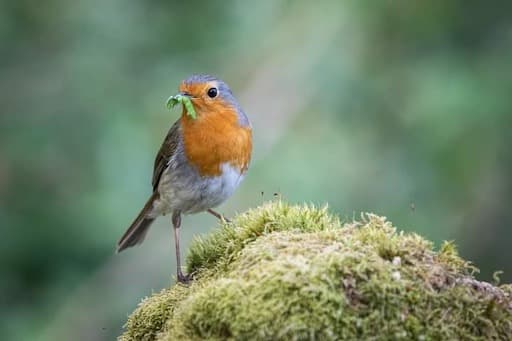 Robin With Caterpillar (Credit Lynn Stout)
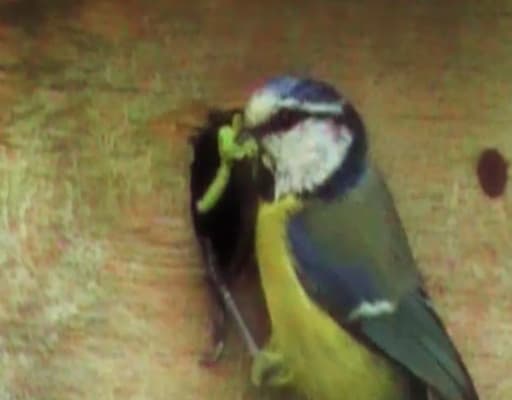 Blue Tit With Caterpillars (Credit Helen Taylor)
Blue Tit Close-Up
Blue Tit With Caterpillars (Credit Helen Taylor)
Blue Tit Close-Up
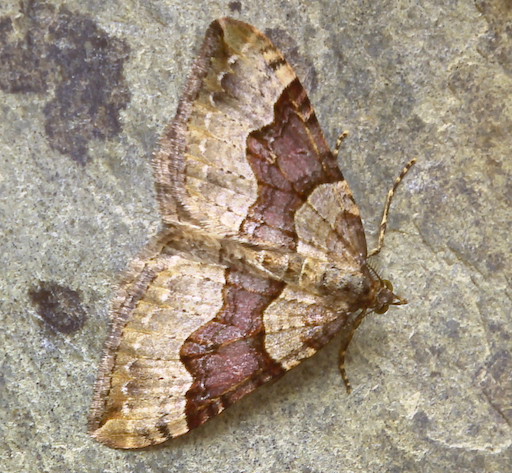 Red carpet moth, a northern species in serious decline, presumed due to climate change
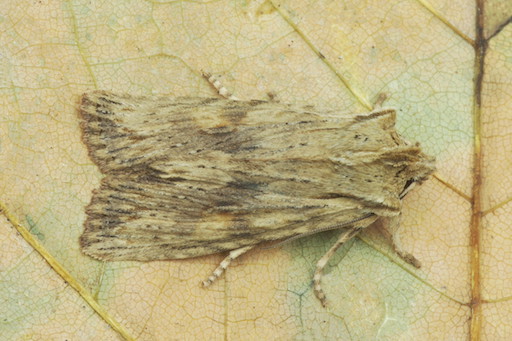 Pale Pinion moth, a southern species which reached Scotland in 1996 and is continuing to spread.
This is part of the Moths and Caterpillars information.