Minibeasts are really just small animals. In the sections below we will learn more about them, why they matter and what Jock has to say about them!
Information and Activities
What Is A Minibeast?
A minibeast is just a small animal. Minibeasts are also called invertebrates. That means they are animals without backbones and they don't have their skeletons inside like we do. Some are soft and bendy, like worms and slugs; and some have hard shells to live in, like snails; others have thin, strong outside coverings called an exoskeleton, like insects and spiders.
Wherever Jock visits on Bennachie he definitely sees loads of minibeasts!
Minibeasts help to pollinate plants, recycle waste material, provide food for other creatures such as birds and reptiles and much, much more.
Jock Says: About 97% of creatures on Earth are invertebrates, and without them we wouldn’t be able to survive!
Big word alert! When he’s talking about minibeasts Jock has had to use a few big words. Don’t worry about them, why not impress your friends and family with them!
Why Minibeasts Matter?
Minibeasts are really important:
- Some are nature’s recyclers or decomposers and eat dead leaves, droppings and dead animals. This waste is broken up by minibeasts and goes back into the soil as nutrients that can be then used by living plants... remember nature makes sure that nothing is wasted!
- Minibeasts help to pollinate plants.
- They are a significant source of food in food chains-loads of creatures eat minibeasts! Did you know that one pipistrelle bat can eat up to 3,000 midges in one night!
- They also produce food for us like honey from bees, silk to wear and lots, lots more.
Find out about minibeasts at the following web sites.
 What Are Minibeasts? (BBC)
 What Is A Minibeast? And Other Bug Facts (Woodland Trust)
 What are Minibeasts? (The School Run)
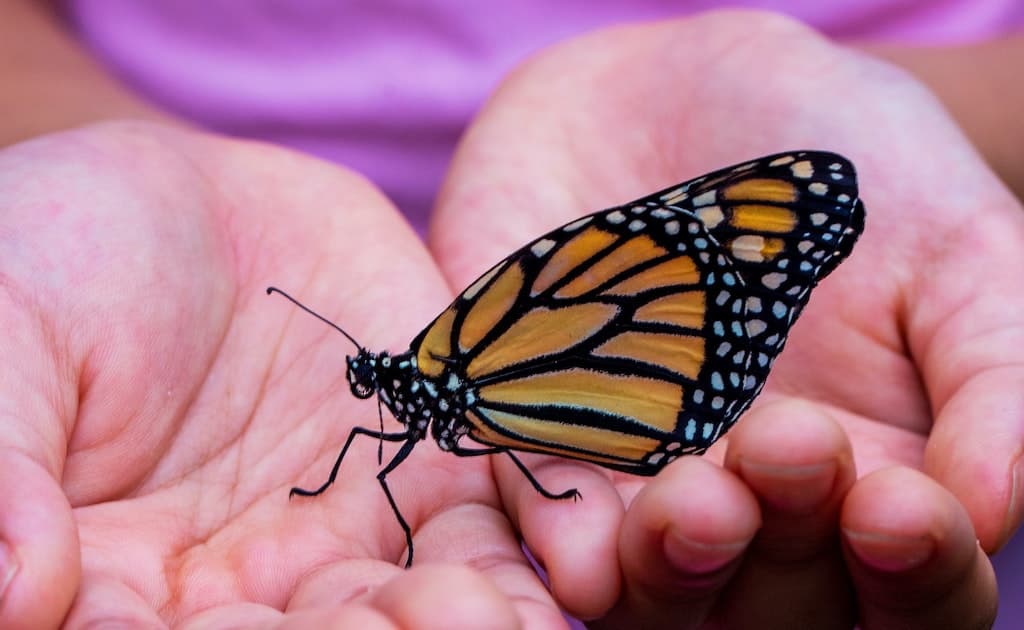
Where Do Minibeasts Live?
Minibeasts can be found in almost every part of the world... the sea, rivers, ponds, lakes, marshes, heathlands, grasslands, woodlands, hedgerows, seashores – as well as people’s gardens and buildings, and even our houses can be home to minibeasts!
Different minibeasts like to live in different places – under logs and stones, in leaf piles, in ponds, in trees, bushes and grass, or in the soil. You’re probably even sharing your house with some minibeasts, such as spiders.
The Young People's Trust for the Environment has excellent information about minibeasts Where do Minibeasts Live?.
Interesting Fact: The UK’s biggest minibeast is the stag beetle-it can be up to 8.5 cm long, that’s giant for a beetle!
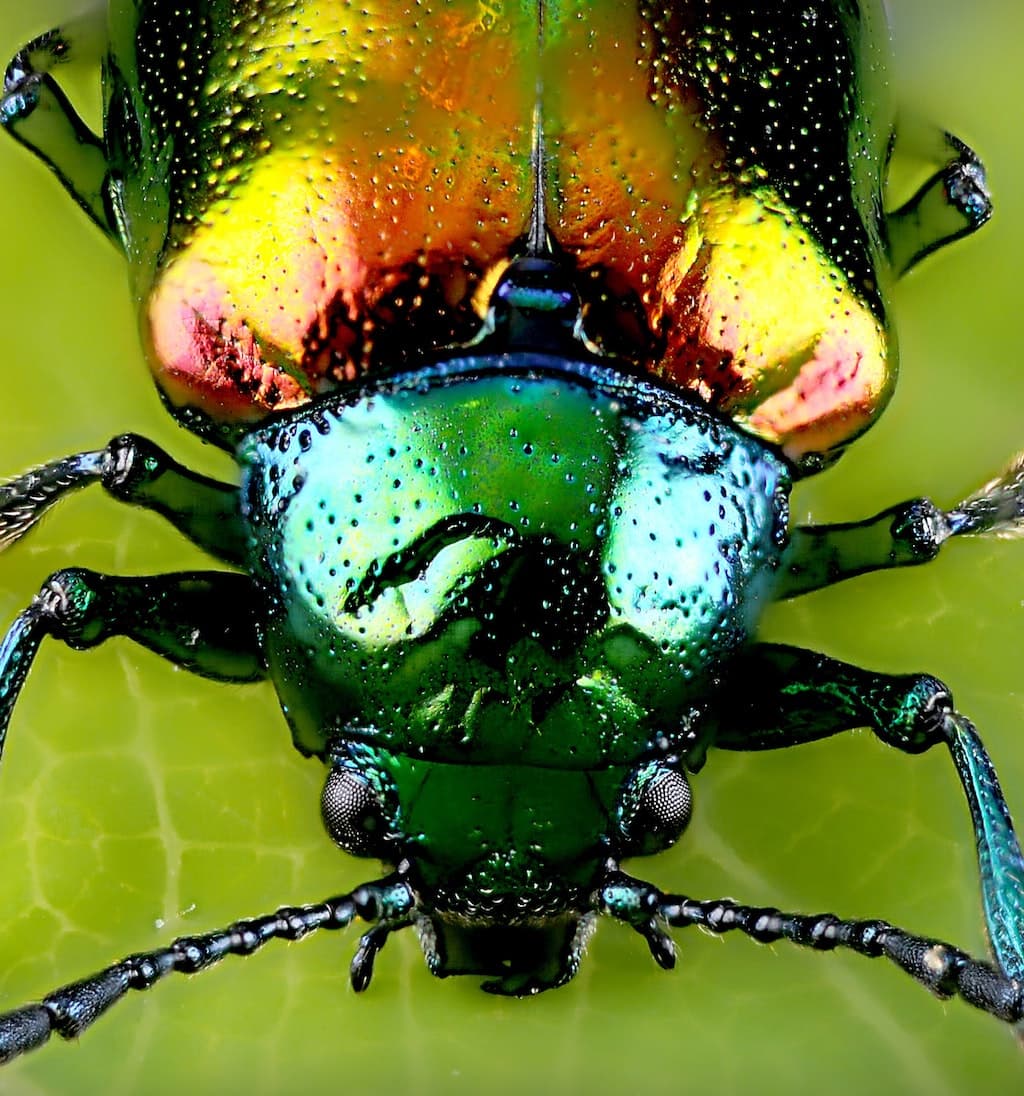 Where do Minibeasts Live? (Young People's Trust For The Environment)
What Do Minibeasts Eat?
They eat all sorts of things. Lots of minibeasts eat plants, and many flying insects feed on nectar from flowers. Others, such as spiders, like to eat other minibeasts!
Some minibeasts eat much stranger things - for example, some beetles and ants munch on wood, earthworms feed on dead grass and leaves, and dung beetles feast on animal poo. That might seem yukky, but these creatures do a great job of recycling and improving the quality of the soil so trees and plants can grow.
Some minibeasts, such as ticks and mosquitoes, even like to snack on your blood. Yuk!
You can read more information on what minibeasts like for lunch at the YPTE What do Minibeasts Eat? web site.
 What do Minibeasts Eat? (Young People's Trust For The Environment)
Some Of Jock's Favourite Minibeasts
Minibeasts are split into different groups. As they contain Jock’s favourites, we’re just going to look at the arthropods and the molluscs.
What is an Arthropod?
- It has a segmented body - this means that they will have a body made up of more than one part – for example spiders have two segments and flies have three segments.
- It has jointed legs or limbs.
- It has an exoskeleton - the outside skeleton that supports and protects an animal's body. They are also invertebrates (no backbone).
- Arthropods are cold-blooded – their body temperature depends on the temperature of the environment surrounding them.
Arthropods include arachnids (spiders and scorpions), insects, myriapods (for example, centipedes, millipedes) and crustaceans (for example, woodlouse).
Now we are going to look at some of Jock o' Bennachie’s favourite minibeasts.
Arachnids
Spiders, scorpions, ticks and mites all belong to the arachnid group. They don’t have wings or antennae, but they have hard exoskeletons (that’s just a hard covering to protect and support the animal). Most have eight legs and two main body parts. They also have extra pincers or fangs! They are predators which mean they eat other creatures so must hunt for their own food!
To find out more about the 65,000 kinds of arachnids have a look by visiting DK Find Out Arachnids web site.
Some say Jock is hiding in a cave on Bennachie, and he shares this cave with a cave spider! He loves watching it making its webs.
Interesting Fact: There are more than 750 million spiders in the UK, and we have 400 different types of spiders in Scotland!
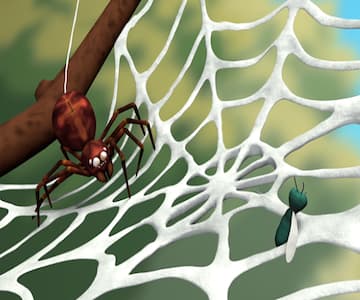
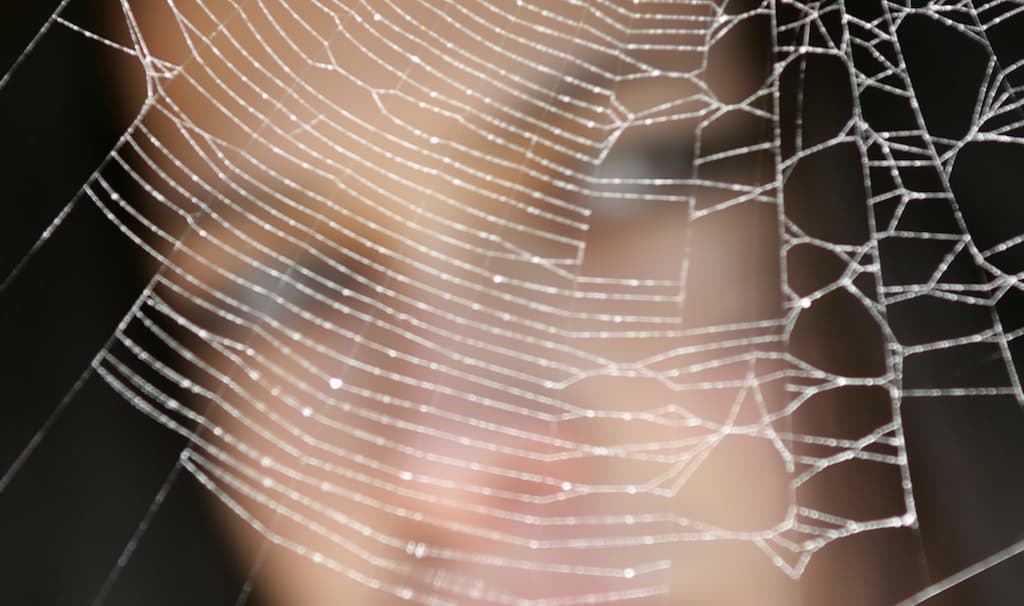
They produce silk from the spinneret glands in their abdomen. Their silk is very strong and they weave it into webs to catch their prey. Some spiders don't use webs and they hide and catch insects as they appear.
More information about spiders can be found in the Spiders section of the (The School Run).
Now watch the video about "Spiders" and a story about spiders by Jackie Ross.
Spiders (Animals For Kids)
A Story About Spiders by Jackie Ross
We also have a quick 30 second video that you can watch to learn how a spider makes a web.
Now in slow motion see how the spider makes a web.
Activity: Can you find any spiders in your house or garden? Read Spiders in Your Home from the Natural History Museum to learn more.
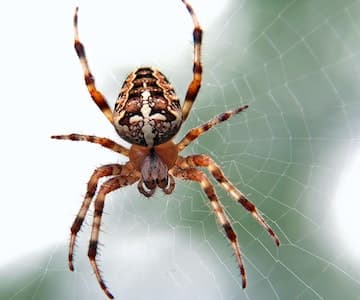
 Spiders in Your Home (Natural History Museum)
Insects
Insects are the most successful animals on the planet!
If you’re an insect, your body is made up of 3 parts: a head, a thorax and an abdomen. Insects have six legs attached to their thorax.
Many insects have wings also attached to their thorax. You can find out more about them on the DK Find Out Insects and Insects (School Run).
Interesting Fact: There are over 800,000 different types of insect on planet Earth! How amazing is that!
Now watch this video to learn why insects are so important to the environment.
Bees, ants and wasps are social insects, although there are some solitary bees and wasps!
Jock always invites social insects that work together in large groups to his parties!
Bees
Bees are very important for everyone. They help pollinate crops, fruit, vegetables, flowers, and trees.
Pollination is the way the male part of a flower reaches the female part to make a new flower.
But bees are in trouble and they need our help! The number of bees has gone down-because of pollution, chemicals used on crops, viruses, and more and more land being built on.
Please help the bees - Bees love gardens that are full of flowers and different plants. Plant these seeds to grow beautiful flowers, which are perfect for bees due to their rich nectar and pollen:
- Crocus
- Snowdrop
- Iris
- Lavender
- Mint
- Cornflower
- Sunflower
- Sedum
- Ivy
Jock Says: One out of every three bites of food you eat is there because of pollinators like bees, butterflies and moths! Wow!
Now watch this short BBC video explaining Why Bees So Important?.
Honey Bees
Honey bees have been sweetening our lives for 13,000 years!
Jock Says: Did you know it takes the lifetimes work of 12 honeybees to make a teaspoonful of honey!
The National Geographic also has 10 Facts About Honey Bees!. Well worth a read!
Bumble Bees
These large, hairy bees are generally black with varying degrees of yellow banding. They are very sociable creatures and live in large "families".
If you want to know more download the Bumblebee ID Guide.
Solitary Bees
What to know about wild bees please download and read the Scottish Natural Heritage's Wild Bees of Scotland (PDF) identification guide.
if  Why Are Bees So Important? (BBC)
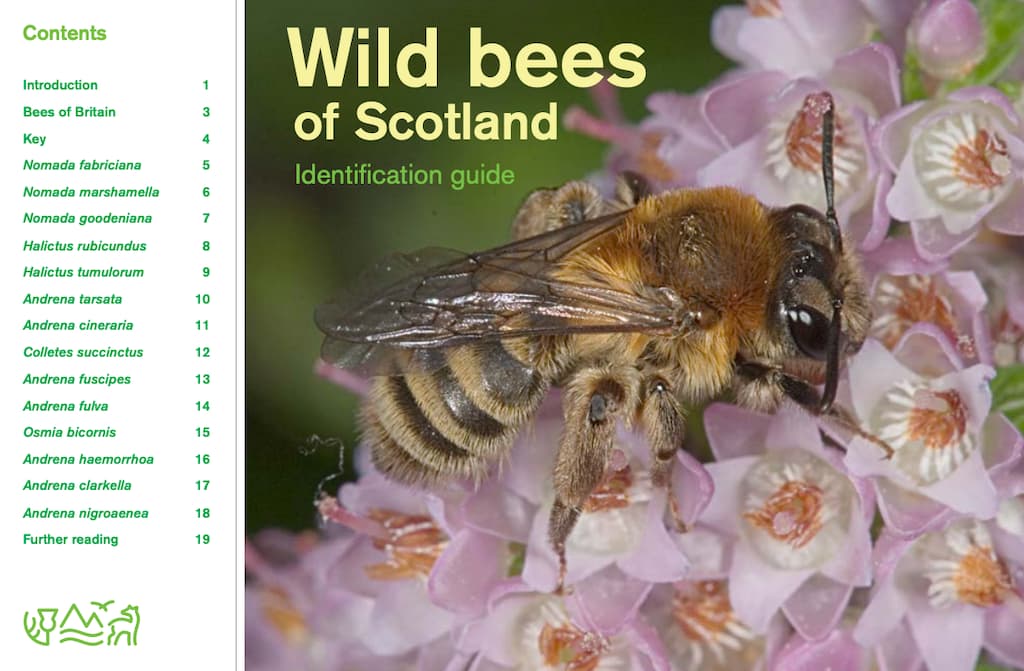 Wild Bees of Scotland (PDF)
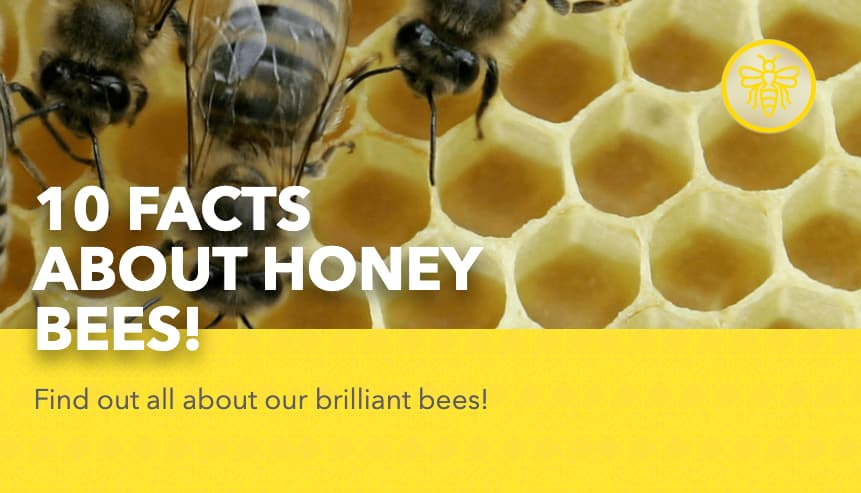 10 Facts About Honey Bees! (National Geographic)
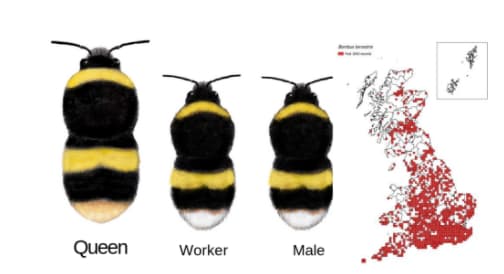 Bumblebee ID Guide
Wasps
So what is the difference between a wasp and a bee? How can you tell a wasp from a bee?
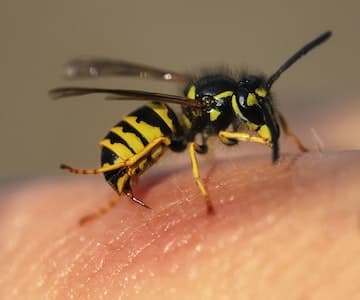
Usually just by looking at them. Wasps are different from bees because they have pointed (instead of rounded) lower abdomens and a much narrower waist than bees have.
Wasps come in every colour imaginable - although they can be classic yellow/black/brown, they are also metallic blue and bright red.
Do all wasps build nests? Yes. Their nests are different from the bees, which produce a waxy substance to create theirs. Wasps chew scraped wood fibres and create more papery nests for themselves... in fact humans copied wasps' nests to make paper!
Ants
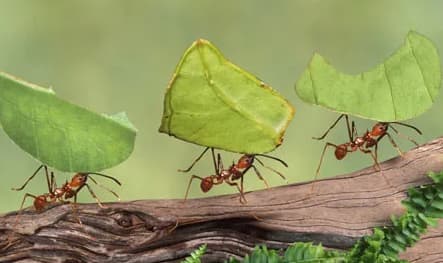
On Bennachie look out for the big, red slave-making ants (in the same family as wood ants). Unlike the wood ants, the slave-making ant does not create thatched mounds but instead nests in dead wood such as tree stumps and logs or under stones. You can find them on old trees stumps on sunny days.
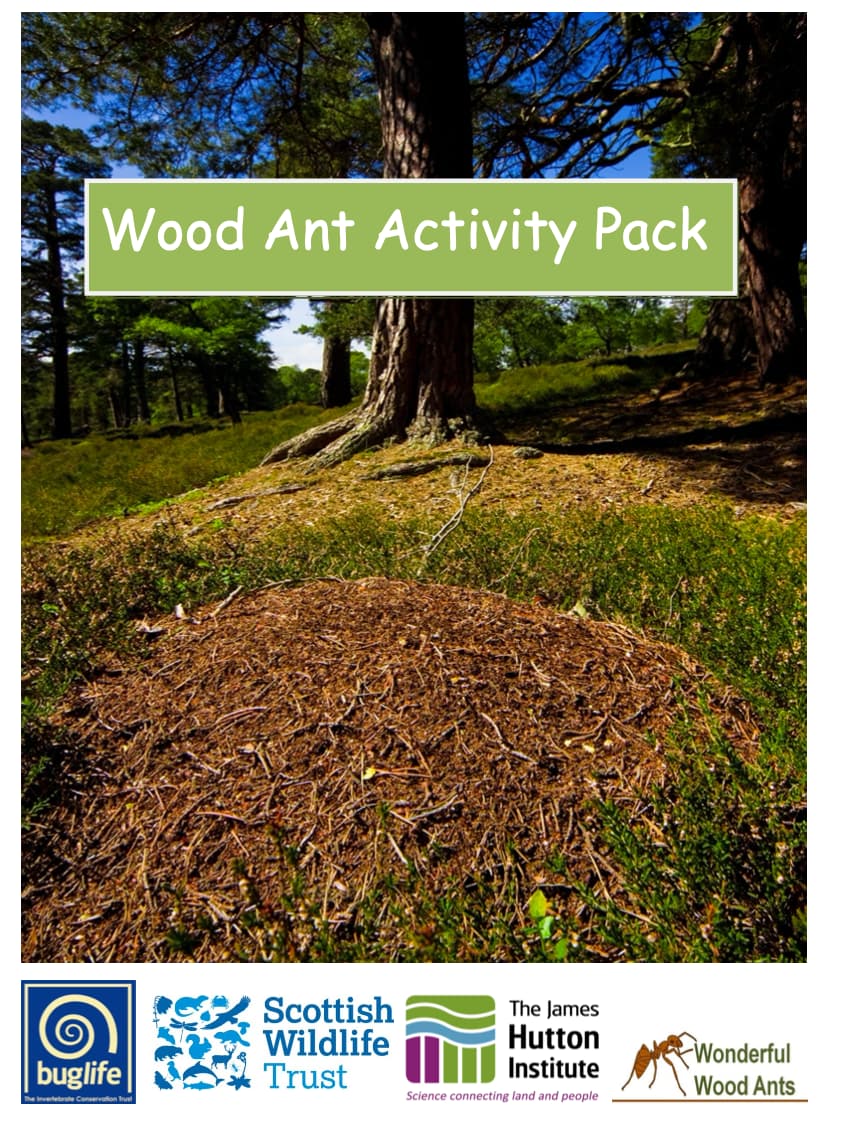
Wood ants are found in old pine woodland. See this pack for more activities Wood Ant Activity Pack (PDF) for more details.
Also visit the "Easy Science for Kids" web site at Fun Ant Facts for Kids.
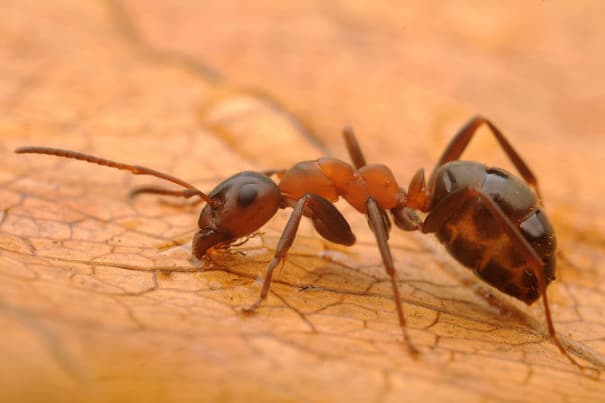 Slave-Making Ant
 Fun Ant Facts for Kids (Easy Science for Kids)
 Wood Ant Activity Pack (PDF)
Ladybirds
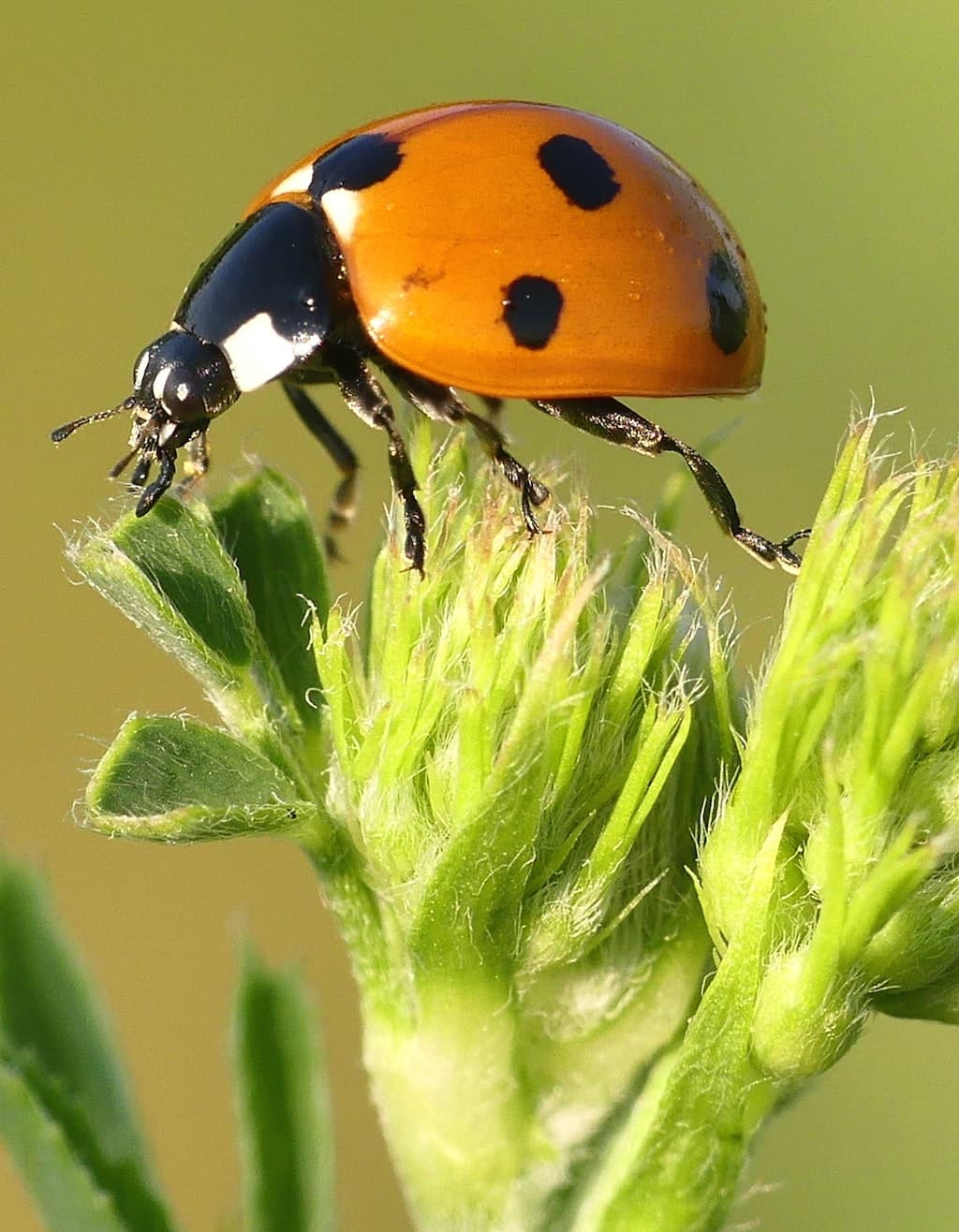
The ladybird, like most beetles, has two sets of wings.
The front wings are called the elytra. They don't move when a ladybird is flying. Then they have the long hind wings which unfold when a ladybird flies.
The wings flap quickly from front to back, at a speed of 85 times every second.
When the ladybird lands, the wings fold neatly back underneath the elytra.
Watch this video to see how it happens in slow motion and then learn more about the lifecycle of a ladybird in the second video.
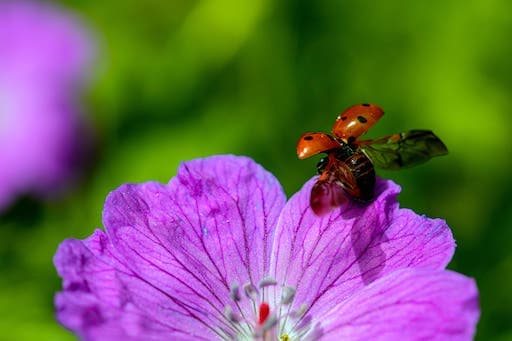 Ladybird Taking Off - Can you spot their wings?
Jock likes these bright beetles as they help to brighten up his parties! Each time he finds a ladybird he counts how many spots it has.
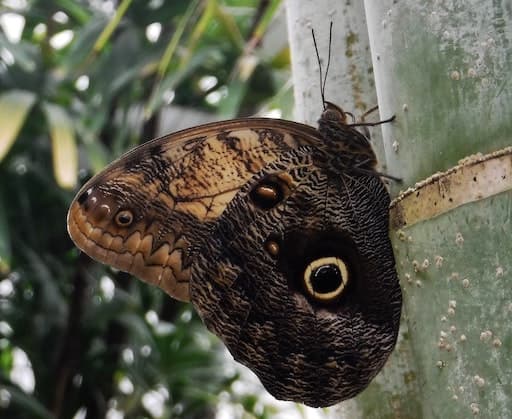
Butterflies and Moths
Butterflies and moths are also very important in pollinating the plants, flowers and vegetables we need on Earth!
Jock usually sees butterflies when he’s looking at wildflowers, and at night time when he is sitting by his candle moths fly in to see him!
Can you tell the difference between moths and butterflies? Here’s how!
Butterflies have four different life stages. During their short lifetime, they undergo a complete change, or metamorphosis. Each one begins life as an egg, hatches into a caterpillar, pupates into a chrysalis and then emerges as an adult. Butterflies need warmth to be active and fly, and they need to drink nectar for energy. Provide both, and you’ll have a butterfly haven. Try to plant plenty of different nectar plants that flower throughout spring, summer and autumn, in a sheltered, sunny spot.
So how a caterpillar becomes a butterfly? Watch these videos to find out.
How a Caterpillar Becomes a Butterfly
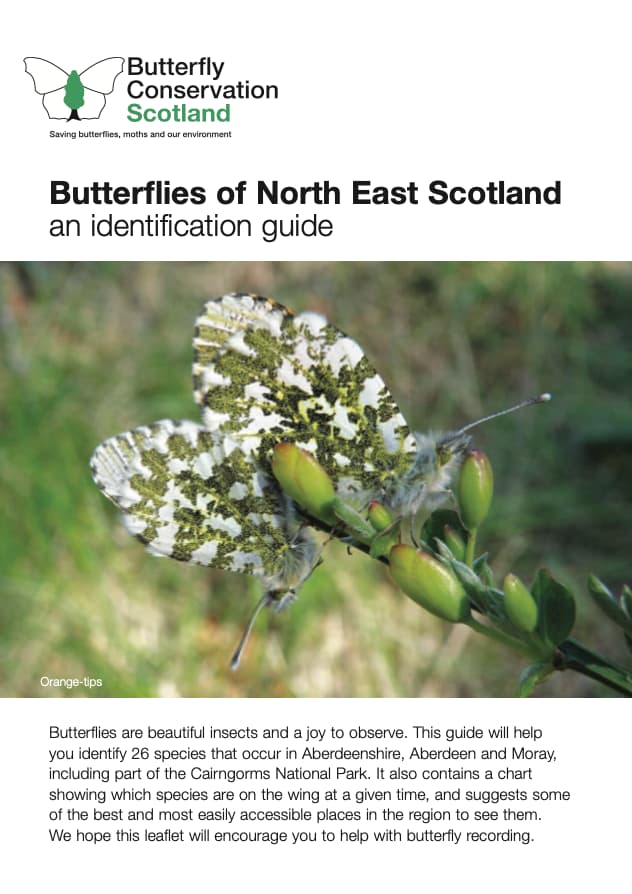
If you want to learn more about butterflies download the Butterfly Conservation Scotland's Butterflies of North East Scotland - An Identification Guide (PDF)
If you want to find out more about butterflies watch this video.
To learn more about identifying butterflies and moths visit,
Butterfly Quiz: Many different butterflies can be seen in the UK. Here is a Great Quiz to see how many butterfly names you know and how to identify them.
 Butterflies of North East Scotland - An Identification Guide (PDF)
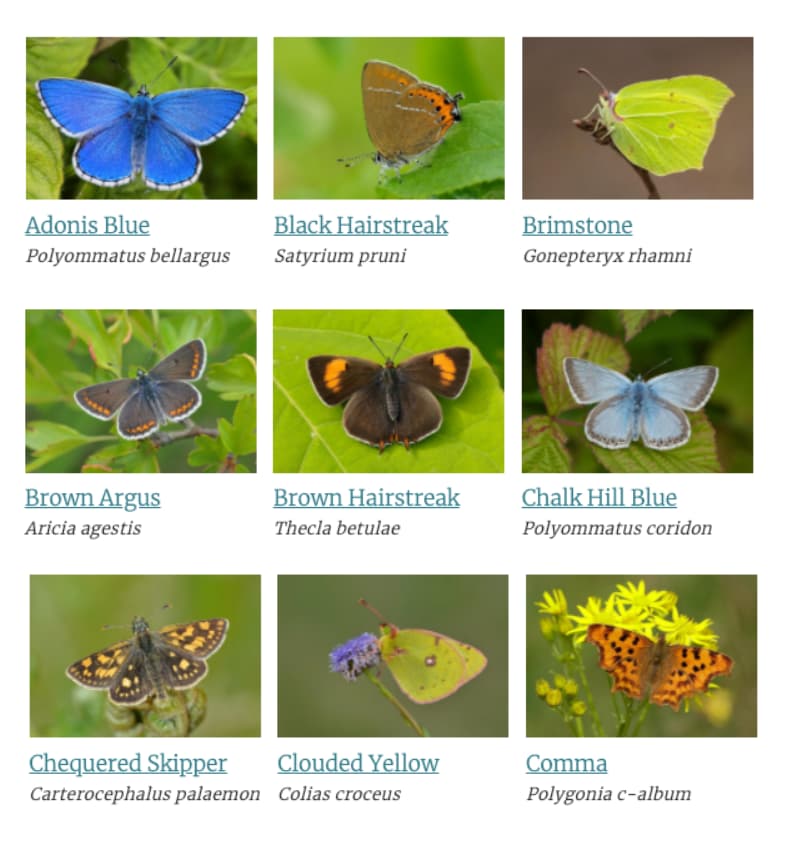 Identify a Butterfly (Butterfly Conservation)
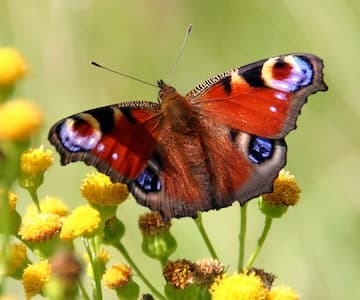 Grow Flowers for Butterflies (RSPB)
Butterfly Tales (Jackie Ross)
Grow Flowers for Butterflies (RSPB)
Butterfly Tales (Jackie Ross)
Molluscs
Molluscs are another important group of invertebrates
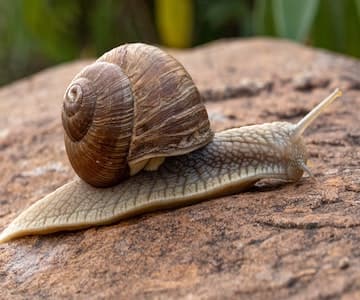
All molluscs have soft bodies, and many grow hard shells to help protect their body parts. All molluscs have a body part called a foot, which helps them move around. Unlike our foot, their foot can sometimes take up most of their body!
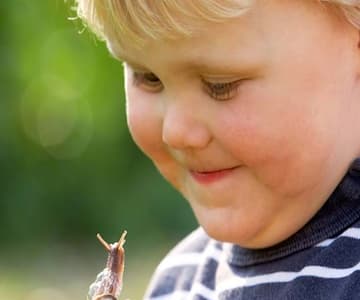
Jock likes looking for slugs after rain or searching for their shiny slime trails on rocks that they leave behind if they have been in the area!
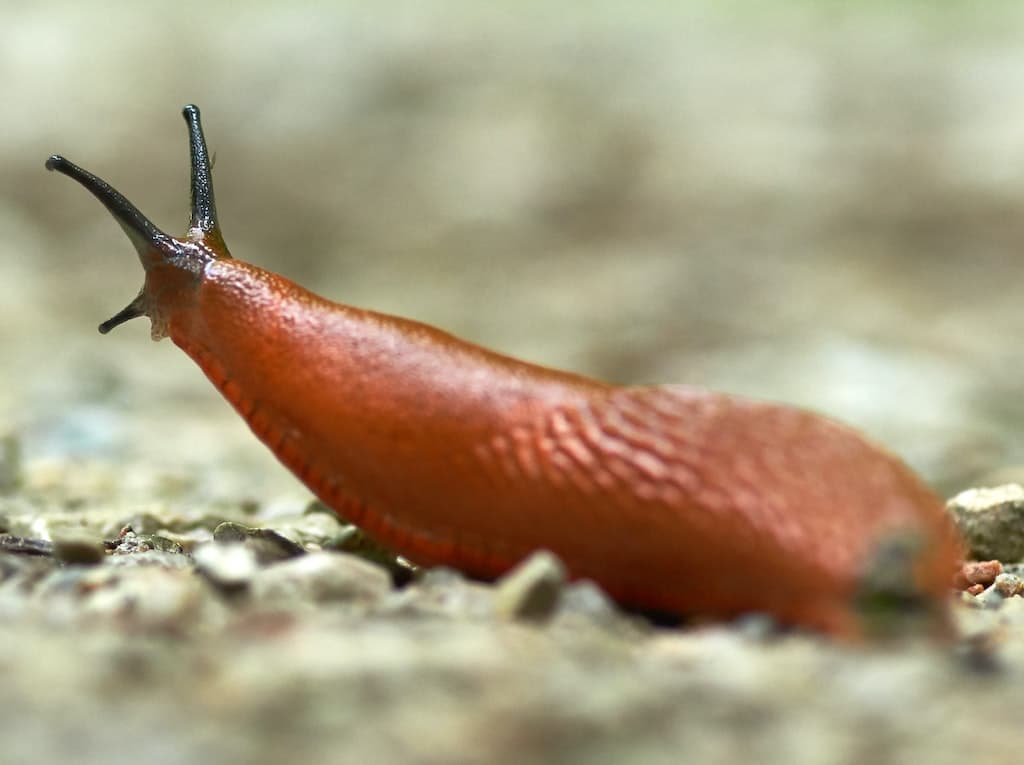
The Slimes - Snails and Slugs
Slugs and snails come from eggs!
Slugs are hermaphrodites, having both female and male reproductive organs. Slugs have no skeletons, and crawl around on what looks like one big huge foot, and they only have one lung.
To learn more watch this video and have a look at the DK FindOut! page on Slugs and Snails
Snails, Slugs, and Slime! (Animal Science for Kids)
Hedgehogs, newts, toads and some birds, like song thrushes, love to eat slugs and snails!
Fun Activity: Try and find some slugs and see if you can identify them! Uses the resource in this section to help you.
To identify slugs look at DEFRA Slug IdentificationUNREACHABLE.
More about slugs and snails look at DK FindOut! Snails and Slugs web site.
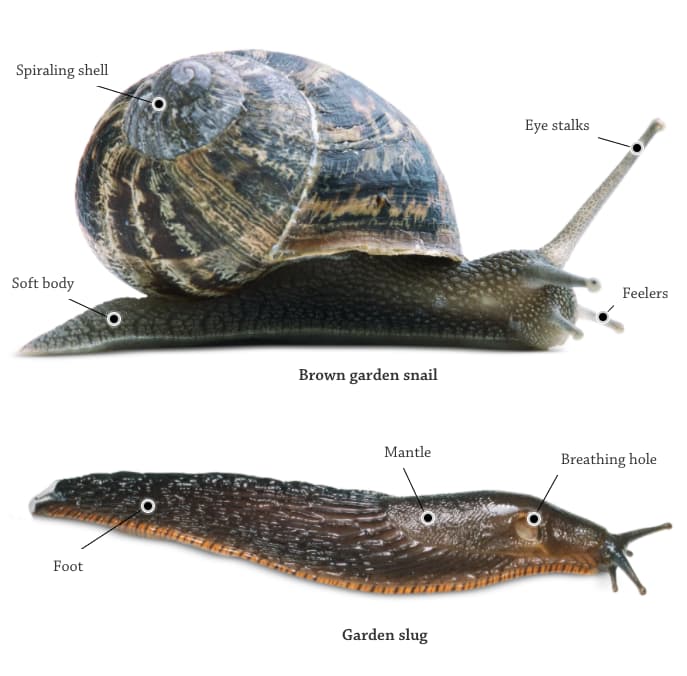 Slugs and Snails (DK FindOut!)
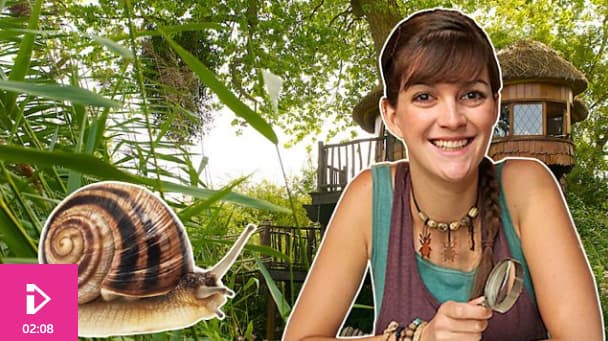 Snails Have Teeth! - Join Jess for an amazing snail adventure! (cbeebies)
Searching for Minibeasts
You can find Minibeasts almost anywhere, so why not get out in your garden or local park or woodland or come to Bennachie to see what you can find! Minibeasts live in all sorts of habitats, many prefer dark, damp spots in gardens and woods.
The Woodland Trust has put together some great advice for going on a bug hunt, and they have a great Minibeast Hunt checklist for the creatures you might discover!
Check out,
- Under stones and logs to find woodlice and millipedes.
- The cracks in tree bark and and deadwood to find beetles and spiders.
- Leaves for caterpillars and ladybirds.
- After the rain is a great time to spot the slimes-slugs, snails and earthworms.
Important: Remember to put all Minibeasts back carefully where you found them.
Remember: While on the bug hunt, keep your hands and the bug hunt equipment away from your mouth. Wash your hands thoroughly afterwards!
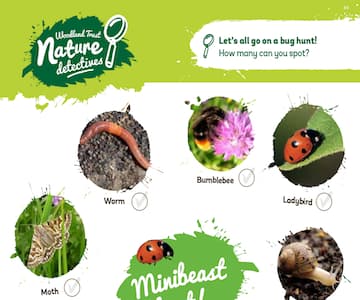 Minibeast Hunt (Woodland Trust)
 Minibeast Spotter (CBeebies)
Jock Says: Be very gentle when you pick up bugs, you might like to use a small paintbrush. Always put them back where you find them. Remember to wash your hands afterwards!
A Word About Ticks
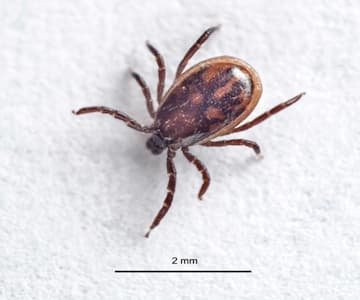
Ticks are members of the spider family. They live in woodland, grassland, moorland and even parks. They can live as long as 200 days without food or water!
They feed on animals, and occasionally people and pets. Some, but not all, ticks can carry diseases like Lyme disease.
Important: If you think you have been bitten by a tick tell an adult at once.
This is a useful guide from the Forestry and Land Scotland about Checking for Ticks and what do do if you find one.
The Ceratopogonidae - Scotland's Deadliest Predator!
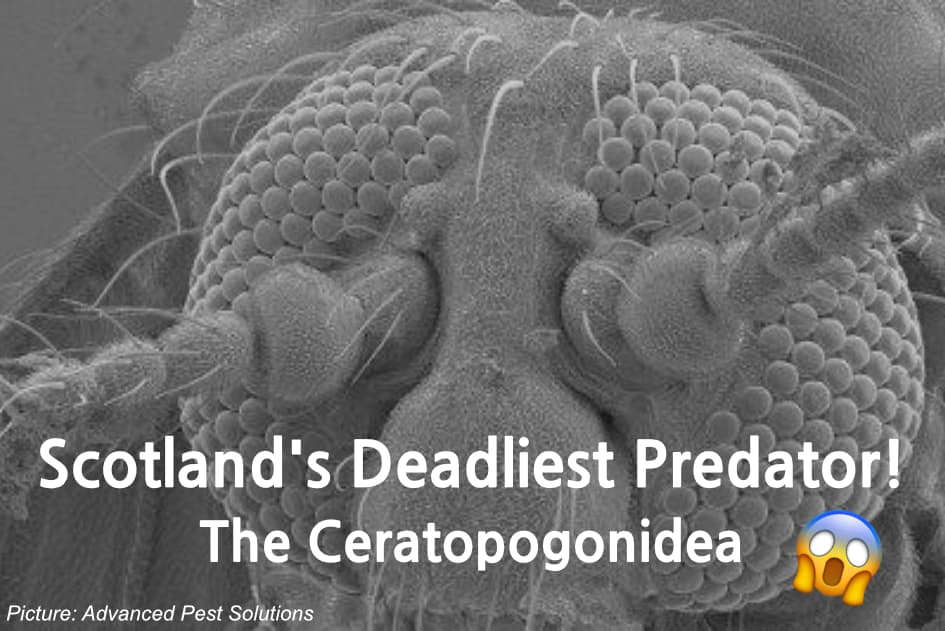
Have you ever met a Ceratopogonidae?
As you'll discover in a minute, this is a very big word for a very teeny tiny wee beastie! Find out how to say Ceratopogonidae and impress all your family!
If you live in Scotland we're sure you definitely have met this beastie before - but you know this arthropod by another name, the 'Scottish Midgie'.
Challenge of the Day - Watch the video below without itching!
Find out all about this dreaded wee beastie, not by searching on the Internet, but instead we want you to ask your parents, phone or message your grandparents, aunties, uncles, or anyone who has had experience of dealing with the Scottish Midge.
Using the information you are told we would like you to draw a picture of what you think this wee arthropod looks like close-up.
Might he have fangs and a kilt?
We can't wait to see!
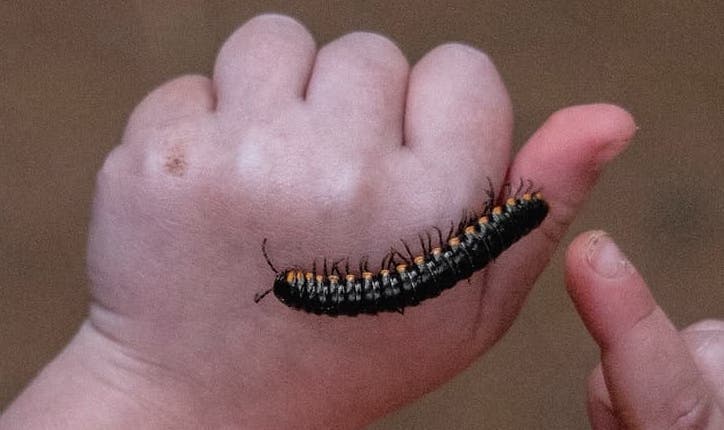
Jock’s Favourite Minibeast Jigsaws
These are some of Jock's favourite jigsaws. Can you do them?
 Butterfly Jigsaw
 Snails Jigsaw
 Jock Says : How Did You Get On?
Jock’s Minibeast Jokes
What do bees do when their friend moves into a new hive? - They throw them a house swarming party.
What do you get if you cross a horse with a bee? - Neigh buzz.
How do fleas travel? - They itch-hike!
What do moths study in school? - Mothematics!
Also see our Summer Programme, Spring Programme, Winter Programme and Autumn Programme
If you have enjoyed these activities please share them with your friends and family.